Astroecology
Astroecology is the scientific study of the interactions of life with space environments and resources. The results quantify the immense potentials for future life in the Solar System and in the galaxy.
Cosmoecology extends these studies to potential life and its resources throughout the universe, for trillions of eons when viable matter will continue to exist, or indefinitely.
The principles of astroecology, experiments on biological resources in space, the cosmological potentials for life, and securing that future, are summarized in the e-book
"Seeding the Universe with Life: Securing Our Cosmological Future" (free download)
Can space resources support life?
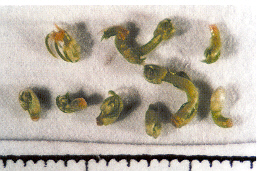
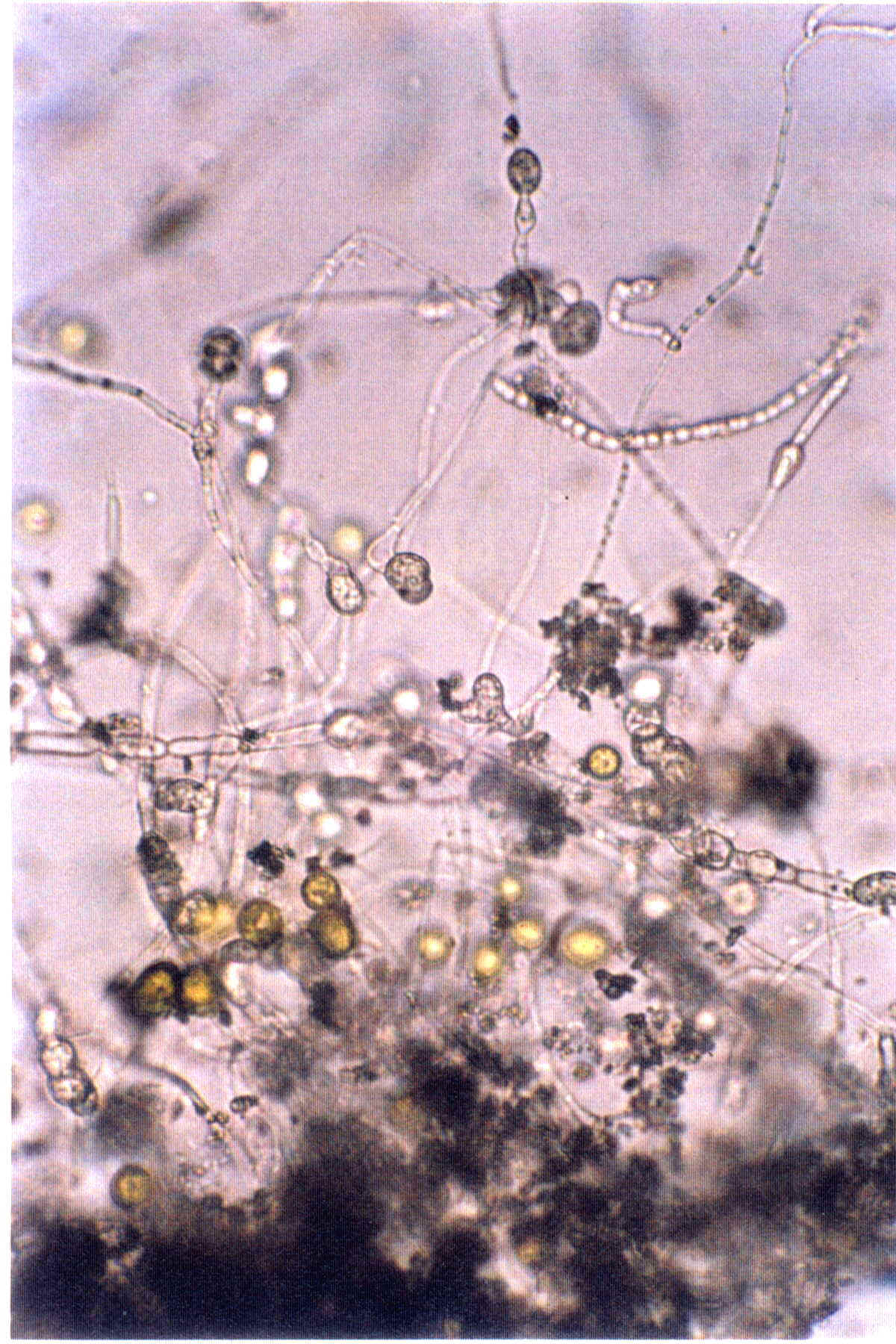
Recent experiments showed that microbes and plant cultures (asparagus, potato) can grow well on carbonaceous and Martian meteorites. This suggests that asteroid and Martial soils are fertile.
Algae (left)and Asparagus (right) growing on Mars meteorite soil
How much life can the Solar System support?
Analysis of nutrients in meteorites show that carbonaceous asteriods can support a hundred million trillion kilograms of biomass and human space populations of thousands of trillions.
How can we measure the amounts of life?
The total amount of life in a ecosystem depends on the amounts of biomass and its duration, expressed as time-integrated biomass (kg-years). For example, the amount of life on Earth to date is about quadrillion kg x billion years = 1e24 kg-years. Potential future life in the Solar System, based on asteroid and cometary materials, is much greater, 1e28 - 1e34 kg-years.
What is the future of life in the galaxy?
Life can survive about white dward stars for trillions of years, supporting astronomical amounts of time-integrated biomass.
How much life can the universe sustain?
If all mass were converted to living matter, and then used up slowly for energy to support life, the universe could contain an immense 1e57 kg-years of time-integrated biomass for trillions of eon.
What is our cosmological future?
For now, we must secure long-term human survival. For our descendants life an continue for millions of eons. Out descendants may then understand nature more deeply and seek to extend life indefinitely. In that future, our human existence will find a cosmic purpose.
Scientific Papers and Books
Books
Book: Seeding the Universe with Life - Securing Our Cosmological Future Free Download
Selected Publications
Astroecology, Cosmo-Ecology, and the Future of Life. Acta Societatis Botanicorum Poloniae. 2014, 83, 440
Planetary bioresources and astroecology. 1. Plant and algal microcosm bioassays of Martian and meteorite soils Icarus 2002, 158,72-86.
Planetary Resources and Astroecology - Implications for Space Populations and Panspermia Astrobiology 2002,2,59-76.
Life in the Cosmological Future: Resources, Biomass and Populations, Journal of the British Interplanetary Society 2005, 59, 167-180.
Hard copy: Click on the image below
Websites
Astroethics, the ethics of settling the Solar System and of seeding new solar systems with life : life-centered and panbiotic ethics. www.astroethics.com
Panspermia, seeding other solar systems with life. Technology and ethics of directed panspermia to secure and expand life in space. The Society for Life in Space (SOLIS) www.panspermia-society.com
Link for young readers: Astroecology for young people.
Contact Email: info@solis1.com